Thursday, 16 June 2016

Post 85: Academic Surprises -- Visiting Scholars!!

About two weeks ago, my supervisor announced that we'd have a guest for basically the entire month of June. Ella Furness is a visiting PhD candidate from the UK (Cardiff University), who is conducting qualitative (interview-based) research with folks doing ecological restoration here in Victoria. She really enjoyed Eric's book "Nature by Design," which was part of the motivation to come here to visit, as well as undertaking (some of) her fieldwork.

When speaking with her last week, I realized that I could have someone to chat with about qualitative research methods, which I'm really interested in, and I asked her to lunch today with that premise. Turns out that we had multiple connection points, and we ended up talking for about half an hour. One point of connection was that I realized I'd recently read one of the papers she published from or shortly after her master's work at UBC, about whether human values and community participation are key to climate change adaptation, published in the journal Climatic Change. That was such a lovely surprise!

One of several Pacific sideband snail (Monadenia fidelis) I spotted while out with a wander on Galiano!
We also shared a moment discussing the struggles of impostor syndrome (which I've previously written about here) and ways to cope with it, and that was also unexpected, kind, and heartwarming. The impostor syndrome is so common in graduate school! I'm amazed that we don't talk about it more frequently, sometimes.

So this post is a quick plug to encourage taking the plunge to connect with those you bump into in your grad school endeavours. Some of these connections will yield meaningful relationships, whether they last for a lunchtime discussion, or branch out into lasting friendships.

I'm also reminded of the excitement of previous visiting lecturers, visiting scholars, and visiting PhD students that I've come into connection with. These visits don't happen that often, but when they do, it can be super nice for your supervisor to introduce you to them, or for you to introduce yourself. Likewise, speaking with the PhDs in your department, or other graduate researchers—your colleagues and peers—is, I think, immensely important for finding shared support and encouragement for the work that each of you is undertaking.

Bright green maple leaf (Acer macrophyllum) also on the trail. Wonder why it fell...
I'm excited for Ella's presentation about her research. I'm sure we'll have some good discussion over lunch later today, but it's also great to give someone a meaningful platform to share their work.

I'm so glad that I said hi this morning! You never know how you can connect with someone until you start a conversation.

And now, back to thesis writing and editing. :)

Tuesday, 14 June 2016

Post 84: FOMO, Grad School, and You

Everywhere we go, there are opportunities to do things, get involved in projects, meet new people, attend workshops. And at some point, if you want to finish your thesis, you're going to need to start saying no to some of these things.

Time is a valuable thing. We only have so much of it to spend. I'm reminded of this watching the news and updates come in from Orlando, where a senseless massacre of innocent, wonderful people who I did not know happened, this weekend. A talented young singer lost her life, and nearly 50 people lost their lives to a man with a history of violence. It is my great hope that the US gets its act together and institutes significant gun reform laws so that we don't have to worry about safety and losing others that are loved, to insanity like the events of this weekend.

Red or common poppies (Papaver rhoeas) from my friend Jenna's garden on Galiano Island. 
After 9/11, everything from box cutters, scissors, and liquids over 100mLs were banned from air travel. When will Americans realize that people with guns kill people, and that they need to be regulated, and that they shouldn't be as easy to access as buying penny candies from a convenience store?! (Okay, it's not that easy, but this reporter was able to buy an AR-15 in under 7 minutes, which to me, is pretty horrifying.)
So while in Canada, the likelihood of being massacred in a nightclub or at a concert isn't as high as it is in the United States, and the chance of unintentional death caused by things such as poisoning, motor-vehicle crashes, cycling, recreational boating, drowning, falls, or burns accounted for about 4.2% of the Canadian population in 2011. Accidents happen, and I have things I want to get done before my life comes to an end!
Neighbourhood California poppies (Eschscholzia californica) with a visiting bee!
One of those things is finishing my thesis so that I can get a stable, fulfilling job working on projects bigger than myself, that attach to communities bigger in scale than simply the circles I walk in. I have a big heart, and I have a lot of energy I want (and try) to spend on the progressive causes that I care about.

So here's to knuckling down, kicking FOMO in the ass, and wrapping up this thesis!

FOMO stands for the fear of missing out, and Wikipedia has a great article all about it, here. So whether you deal with it a lot, or only sometimes, know that if you want to finish your thesis, it'll take a bit of work to understand your own behaviours, the way you make decisions, the kinds of actions you take, and how you prioritize tasks in your life.

Gorgeous "ruby heart hens and chicks" (Sempervivum) succulent from Jenna's garden.
As an introvert, I love meeting up with friends for coffee or over shared meals, and doing this on a one-to-one basis. I don't like big groups, I rarely attend big group parties and massive social gatherings, and value being able to stretch my legs over a catch up, or over a board game. I have also lived in Victoria for almost 10 years now. So when I live quite a ways from campus, so it can be difficult to say no when a colleague or friend wants to meet up for a coffee or get together that requires extra travel and time. I've seen a few days zip by that are 'running errands' and a coffee date, going to the library for one more book, and then I don't get any writing done! Watch out for those days. Don't let those be a habit. But do also make sure to balance your work time with your social time. So don't line up a coffee date or two every day, but do line one up here, and another on the weekend. Go for coffee during breaks, and take your watch so you know your timeframe and don't break it.

Prioritize your writing and work every day. Schedule your writing time and guard it. You can do it, and just like me, you're going to finish your thesis. I'm into the last chapters of my thesis, now. The end is in sight.

Happy writing/editing/revising!

Monday, 23 May 2016

Post 83: Book Review: Scheduled Writing, Habitual Writing, or "How to Write a Lot"

This post is written with, once again, big hugs and thanks to my colleague Dr. Garrett Richards, now a post-doc at the University of Saskatchewan, who recently recommended the book the title of this post refers to.

"How to Write A Lot: A Practical Guide to Productive Academic Writing" by Paul J. Silva is a practical, no-nonsense book geared at helping academics (and graduate students) learn how to write more productively. While the book specifically targets psychology graduate students and academics, its principles are general enough to appeal to those across other disciplines, too.

From my reading of the first—excellent—three chapters, the basic messages of the chapters are this:

1. Writing is a skill that can be learned, especially if one is willing to put in the time to learn how to write well.
2. "Academic writing should be more routine, boring, and mundane than it is."
3. Scheduled, regular writing is more important than the number of hours in a day or days per week. (This is the establishing the mundane part of writing.) 
4. Any of the common excuses you make for not writing are not good ones, so don't make them. Some of the common and pervasive excuses that the book blasts in Chapter 2 are:


Wisteria on campus at one of the Chapel entrances. Very lovely!
A. You don't 'have the time' to write; you do: you allocate time to write every week/day, and are rigid about that time. This way, writing is regular and expected. 

B. Need to read more, analyze more data, run more tests... This is fine, as long as you actually do these things during your scheduled writing so you can get closer to putting words down on paper for yourself. Whether it's reading another article, running another statistical test, or reading through a journal's submission guidelines. As long as you're not using those things as excuses to avoid sitting down and working on or getting closer to what you need to be productive with your writing.

C. (This one is most obviously excuse-like:) Need a better desk, chair, computer, etc., in order to write. Need the 'right' notebook, or something like that. **Note: I haven't encountered this excuse myself, and while I can't say as much about the other ones, I haven't found myself talking about this, either. But in short, you don't need the latest and greatest technology in order to write.
As a side note: If you have an existing repetitive-strain or motion injury (I've dealt with one of these myself before), then do do your homework and figure out what ergonomics you need to change in order to be able to write comfortably, and without injury. I've written about my discussion with the on-campus ergonomics person here. 

D. You want to wait until you feel like writing. This one has to do with feeling inspired to write, and the idea that the best writing comes from those inspired emotions. However, this leads to inconsistent, erratic writing patterns that usually doesn't produce a lot of words, and if you want to finish your thesis, then you need to regularly be putting words to paper and doing something with them.

Lovely white harebells (Campanula rotundifolia) with tiny dragonflies in them!! Walking James Bay this May. 
Chapter three starts in on some motivational tools to get writing. And I've found some of them helpful myself.

The first is setting small, manageable project goals. You want to be able to measure your progress and keep moving forward in a way that you feel good about. Setting small milestones is a great way to get to passing big ones. You can also have an ongoing list of things that you want to write, which, when you have a regular writing schedule, become an ordered list of things to do. "A binge writer," Sylvia writes, "would feel anxious when confronted with this long list of writing projects, but you have a schedule." And you will get all your writing done in your scheduled writing time. :) (There's a lot more in the book about goal setting... and I'm really squishing this material down. Forgive me.)

Prioritizing your writing projects. Silvia suggests this order of things after his discussions with successful graduate students:
1. Projects with deadlines (eg. papers for classes, grant proposals, etc.)
2. Curricular writing (eg. a thesis!)
3. Professional publications (eg. an academic article or a white paper)
4. Other, miscellaneous writing (such as this blog!)

Then Silva spends a bit of time discussing monitoring your progress, or collecting data about yourself and your writing habits, behavioural patterns, and outputs. You set yourself a writing schedule for 8AM-10AM every morning of the Mon-Fri work week, but you are not a morning person, and you get discouraged because you sleep through your start times. Okay, so maybe mornings aren't your best time to write. But you can keep track of different times you set to write for yourself, and track that data! Then you can start to see when you meet your writing goals (keep them small and manageable), and then you keep up your momentum and motivation.

This chapter finishes with a quick note about writer's block. Basically, Silvia argues that academic writers can't get writer's block. "What are you trying to write?" he asks. "You're not crafting a deep narrative or composing metaphors that expose mysteries of the human heart. The subtlety of your analysis of variance will not move readers to tears, although the tediousness of it might (p. 45)."

He goes on to say: "Saying that you're not writing because of writer's block is merely saying that you can't write because you aren't writing." I think this is true enough. When I think of things that prevent me from writing (impostor syndrome, fear of failing, perfectionism...), these are things I allow to get in my way, but not because I don't know what to say. It's because I'm afraid that what I'll write won't be good enough. Though if I think about that, that's what revision is for!! :)

Meet Stewie: the tiny and oh-so-cute deep sea octopus print from the Wildlife Photographer of the Year 2015 Exhibit at the Royal BC Museum that I received as a lovely late-birthday present. <3
As a graduate student, human being, and world citizen, you do have lots of things to write and say and share, whether it's for yourself or for others. It's a lot less stressful sitting down to write out a draft of something, revise it, and figure out how best to express it than to get caught up in worrying about how you might say the things you want or need to, but not giving yourself the change or set up to be successful in doing so. (I write this as a reminder to myself, as well.) :)

The book has five more chapters, continuing on with how to form your own specific writing group, a discussion of style, one chapter each on how to write journal articles or books, and finishes with a short chapter on "The Good Things Still to Be Written", or reinforcing how scheduled writing will be rewarding, that you will spend more time writing, as opposed to wanting to write, that you will enjoy life more because you aren't stressing out about how much not writing stresses you, and that you can write as much or as little as you want. Cheers to that!

And, as the book mentions: "Let everyone else procrastinate, daydream, and complain-spend your time sitting down and moving your mittens."  Wishing you much happy, scheduled, regular, and mundane writing ahead!

Citation:
Sylvia, P. J. (2007). How to write a lot: A practical guide to academic writing. Washington, DC: American Psychological Association.   

Tuesday, 17 May 2016

Post 82: Thesis Images and Due Diligence re: Copyrights

This post is dedicated to one of those other niggly detail things that you need to keep track of as you get close to finishing your thesis: images and diagrams that you have borrowed or altered from other texts or sources, that appear (cited) in your thesis, how you do that, and how to find out if you need special permissions when using someone else's work.

Currently, the best resource to go talk to about this is Ms. Inba Kehoe, the Copyright Officer at UVic. During my discussion with her, it became clear that in order to follow through on due diligence, it's best to handle each image individually, because different sources and different formats may require handling their copyrights differently. Speaking with her in person is a great option to do this. If you're at the end of your degree, and are no longer living in Victoria or cannot make it to campus, it is possible for you to send your images or part of the article with your images ahead to her, so she can look into a few things, and the discussion can happen over email or otherwise online.

Beautiful BC Mountains -- flying back to my home province a little while ago.
Unlike citations for other written works, including the grey literature, books, or easiest of all, journal articles, I felt a little bit more concerned about reproducing an image from someone else's work. Is it as straightforward as listing the author and publication year [eg. (Lettrari, 2016)], as with written works? Do I need to obtain special permission? How do I go about that? Do I need to do it for a single image? For every image? Where is the cut-off line? Is there one?

I'm happy to say that Ms. Kehoe was very helpful in answering all of my questions, and I now know a lot more about having to look for the "Terms and Conditions" or otherwise Copyright information use for reproduction. For websites or online information, it's usually located at the top of bottom of the page; generally, I was told, federal government information is quite good about informing users of what they need to do to use their information.

Best of all, after this discussion, I no longer need to stress about figuring out how to cite the images for my thesis: in my case, I was interested in three images, and here's what I learned...

1. From a historical government technical report (dating to 1974), in which the authors had made their own graphics, depicting a basic schematic of the life cycle of the mountain pine beetle, and its relationship with the local weather conditions. Since the authors created the image themselves, and for that specific report, and because I am using less than 10% of the publication, I can simply cite the report directly. The 10% figure comes from the "Fair Dealing Copyright Guidelines" at UVic. I also found a useful schematic to look at here, too (Copyright Flowchart for Online Course Materials), which, although designed for a specific context, I also found relevant for thinking about my thesis materials. I do still recommend checking in with Ms. Kehoe if you have further questions or concerns.

Lovely red chestnut blossoms (Castanea sp.) lining Craigflower road this time of year!
2. The second image I want to use is a map of the spread of the mountain pine beetle during the first dozen years of the most recent outbreak. Produced by the Canadian Forest Service (Natural Resources Canada), it shows its rapid range expansion from British Columbia further north and east into the boreal forest -- and is, in other words, a key image for my work. Because I retrieved it from an online publication, we tracked down the site's Terms and Conditions, wherein it explained exactly how to work with the data on the website.

There were three conditions they gave if the work was used for public, non-commercial (which my thesis work falls under); the first two were very straightforward (1. If I don't alter the image, then I don't need to do anything else; 2. I need to give proper attribution), and the third was including a disclaimer with the citation for the image that it is published by the government of Canada, and that it has not been reproduced in affiliation with or with the endorsement of the Government of Canada. That is not onerous at all.

3. The third image I want to include in my thesis was one generated by my library's Summon—the portal that does all the searching through the databases and journals, etc., when I am looking for something, which in this case, was the rising incidence of journal articles published with "novel ecosystem*" in its keywords. I was trying to acknowledge in my literature review chapter that the concept was really being taken up since the publication of several key articles between 2006 and 2009 and onwards. Indeed, this year, the Ecological Society of America (ESA)'s annual conference theme is novel ecosystems.
Perfect end to a summer day: fresh strawberry rhubarb crisp in the evening! :)
I am very pleased to have made the appointment with Ms. Kehoe. It was a very informative and ultimately relieving meeting that made me feel more in charge of my work.

I also learned that I do NOT need to cite images or figures that I produce myself for my thesis. There is not need to 'self-cite.' This does not apply for work that is already published and exists elsewhere, which will need to be cited as per usual practices. But if this is a new diagram or image produced for your thesis or dissertation, you simply include the descriptive text that helps explain the thing, and off you go! It's standard to assume that it is the work of the author(s) if there is no citation. This also makes me realize why it's very important to cite properly; you could otherwise inadvertently be taking claim for someone else's work!

Onwards and upwards! The list of things to do to finish my thesis is starting to get smaller! :)

Saturday, 14 May 2016

Post 81: Whole Health Grad Student: Finances Part 2

I've been thinking about a couple of posts that I've wanted to write about thinking of your whole health when you're a grad student. Some of these thoughts have to do with health issues or stressors I've encountered along the way—a consistent reminder that my body isn't just two legs and a torso that walk my brain around on campus—and realizing that my norms of behaviours can dramatically influence my well being.

The first of these types of posts follows up on the financial post I wrote in the fall of 2014: "Post 32: Making Finances Easier: The Graduate Student Tuition Income Offset Plan," where I discussed that graduate students have the ability to arrange for their tuition to be paid in monthly instalments over a semester, instead of one giant lump sum at the beginning of the month. Depending on students' financial situations, it can be difficult to pay several thousand dollars all at once at the beginning of the semester. As well, funding is typically disbursed in monthly instalments, so it can be very useful to align your tuition payments with your monthly income patterns.

Super fun wall paper from a store down on Johnson Street.
Improving your financial literacy, understanding what your options for tuition payment are, and managing your finances well as a graduate student are all important things. Grad school is stressful enough without having to worry about additional stressors like having enough money to buy casual professional clothes, going out for a drink or two with new colleagues/friends/fellow grad students, or, something more fundamental such as food.

With that in mind, I'm going to suggest having a gander at my friend Mike Renaud's blog called Frugal in Victoria: it champions financial literacy, managing your finances well, offers suggestions for finding affordable by healthy options when eating out, and otherwise covers a variety of topics from tenants' insurance to credit cards, to investing, psychology, philosophy, transportation, hobbies, and more. It's a great blog, and I've learned a lot by keeping up with it. Take a look through the Posts by Topic to get a good sense of what the blog is about, and pick a couple posts that look interesting to you. The posts offer a good balance of general financial 'cents,' as well as tips specific to Victoria. Great to check out if you're going to school in town here, or at Royal Roads. :)

Some of the blog's recommendations, such as managing your monthly expenses, knowing where you spend, being aware of the cognitive biases that influence where you shop and what you buy when you do, have been very important for me.

Dew-decorated neighbourhood clover leaves! :)
As a graduate student with a limited income, it's also been very important to me to feel in charge of where my money's going, and have a good overview of what my expenses and savings are, so that I can set myself up for a bit of a break when I'm done this degree. Feeling like my finances are in order is one helpful way to avoid another stressor in this whole thesis experience, and I keep a monthly Finances document where I keep data on my purchases, my income, projects/donations, and hobbies that I spent money on. It's a good system, and I know that I pay my credit card off in full every month (and build my credit rating at the same time!), put a small payment towards my still remaining student loan (from undergrad), and save what I can when I'm able to.

I know that I keep an emergency fund, and a minimum of $1000 balance in my main checking and expense account. Buffers are really, really good for your financial health.

Cheers to being in good financial shape. Writing this post also brings to mind advice from a friend in undergrad: "Don't go to grad school if you have to go into debt to do it." Thanks to generous funding for my program, and work that I've maintained during and on the side of my degree, I haven't had to take on additional loans to complete this degree. I am so so grateful for this, even if working and TAing after my fellowship and grant ran out has extended the time it's taken to finish up. If your grant application doesn't go through, or your savings aren't enough to cover the possible expenses of the degree, or you don't see where you have other income coming in to help fund your way through, it might be a good idea to have another sit down stew with yourself about whether the program you've been offered a spot in is really worth it for you. At least, have a good conversation with yourself about what your financial as well as your educational goals in this experience are.
First salmonberries (Rubus spectabilis) of the year! Thank you David Turpin courtyard!
As I've written about previously, it's also not guaranteed that your program will take you as long as advertised. Many things can come up, from program structure, interpersonal conflicts with supervisors, mismatches in project understandings, funding, health issues, or the impostor syndrome. In other words, sometimes life doesn't pan out the way you envision, and it's good to have as much on your side for fielding the unexpected as possible. That includes your finances.

If you are struggling to keep your finances in order, aren't sure where your money's going, and have panic attacks when you sign in to your online account because of how much (or little) money is remaining, send me a line and I'll email you the spreadsheet I use to keep track of my expenses. It works really well. Alternately, I know that Mike at Frugal In Victoria is also always open to an email, and he thinks about this a lot more than I do.

Thursday, 12 May 2016

Post 80: Research Ethics

Finally this post! This one is a bit of a long one, but ethics are important, so it's worth it. The week following the presentation on research data management plans, Dr. Natalie Ban also organized a discussion-based workshop on research ethics with Human Resources Ethics Coordinator Ms. Eugenie Lam. Since several of the students in the new cohort of graduate students this year were beginning or in the middle of their ethics applications, it seemed like a good time to check in with Ms. Lam to ask any questions.

I went because I really enjoy thinking about research, and had to submit my own ethics application for my thesis research. I also attended this presentation with a few specific questions around technology and ethics: how best to gather and store confidential data using the internet? Are there any best practices around what technologies/programs we can or should use? Or should not use?

A fairy hill of fawn lilies at Thetis Lake! 
For a little bit of background: researchers in Canada (and likely in different countries, according to those countries' regulations) are bound by federal law to comply with a set of research ethics and standards. In Canada, the Tri-Council (the Social Sciences and Humanities Research Council or SSHRC, the Natural Science and Engineer Research Council or NSERC, and Canadian Institutes of Health Research, or CIHR) sets out regulations that govern research across the country, and each higher education institution needs to ensure that its researchers comply with those regulations. The policy can be found right here, actually.  It's the same policy that Ms. Lam and the Human Research Ethics Board look at when assessing applications.

As graduate students, we typically need to start thinking about, and then following through on applying for our ethics applications towards the end of our second semesters, or when coursework finishes up. I remember spending about 40 hours—an entire week—working on my ethics application. The hard work paid off in my case, however: I didn't have any revisions to make when my application was assessed, which I understand is unusual. But I was very diligent, made sure to include ALL of my recruitment materials, appendixes, and fill out every question in the form.  UVic's ethics application can be found here. There's also an annotated version that helps you understand what information each section of the form is asking for. So useful!

You want to take a look at the application form early into the semester, not only because you get a sense for the kind of information you need to think about, but also because the form is so detailed, it may actually help you with the design of your study.

More lovely quince! 
One word to the wise: the UVic Research Ethics Board is fantastic! The staff there are extremely helpful, and I would encourage all graduate students to think of them as allies. They are not there to police you and shut down your research. Instead, they will help you figure out how to do what you want to do, even if there are some changes that need to be made.

You should complete your ethics application before you gather any data, but it's a good idea to make some initial contact with some of the folks in the community you want to study (speaking from a qualitative/interview-based research perspective), whether to suss out your initial research questions, or just get a sense of whether your project is possible/worthwhile/interesting. An observation from Ms. Lam at the session was that if you want to conduct research with First Nations communities, you likely need to either have pre-existing connections to the community you want to study, or you will need to rely heavily on pre-existing relationships that your supervisor has established, otherwise it will be very difficult to quickly build the trust, rapport, and relationships you typically need to recruit participants for your study. There is often an expectation that work with specific communities will also result in co-benefits for the participants or community as well, so keep that in mind, too.

Once your application is approved, it will be valid for one year. I highly recommend filling out the simple form to extend the duration of your application even if you are already writing your thesis and all your data collection is complete; you never know what might come up, and it's much easier to fill out a 2 page form, than to go through a whole new application if you didn't renew but need to go collect more data or something. Don't do that to yourself.

Afternoon Thetis Lake reflection. 
If you make any substantive changes to your study design, or the questions that you submit (for example, I submitted tentative interview questions, and updated my application with an amendment when they'd become finalized), you can easily modify your application. Just make sure you do it. You can always send an inquiry email first, describing your planned changes, to help determine if you need to submit an amendment or not.

What I also recommend is talking to other students in cohorts before yours, or other students of your supervisor's, or your supervisor's own work. If they have done similar research to yours, see if you can get a copy of their ethics application. Ms. Lam stated that the Ethics Board isn't able to keep A+ ethics applications from other researchers (I asked, because I do really well with models), but also recommended talking to your supervisor. Seeing how someone else thinks through similar questions can be incredibly helpful, and I know helped my own thinking along. If you want a copy of my ethics application, please drop me a line. I'd be happy to send it along, as long as it's only for your individual use.

Did I get my questions answered during this presentation? Well, yes and no. Turns out that there don't seem to be any best practices for how to gather data using the internet, Skype, or Google Hangouts... the best that you can do is be transparent with your participants so they know that you're using Skype or whatever the technology is, in order to talk to them.

Carrying through on due diligence for your research ethics ensures that you know how you're recruiting your participants, what you'll say, what you're asking from them, how you're going to obtain that data, what you will do with that data afterwards, and how you'll store if past your project.

So while it will take a good bit of work to think through the ethics application form, it can also be fun, and by the end of it, you'll know how to engage with your participants in an ethical, respectful, and safe way.

Friday, 29 April 2016

Post 79: Fresh flowers, fresh flowers! Come get your ORCIDs now!

Okay, so you may have noticed that I spelled 'orchid' wrong in the title of this post...

Gotcha!! I'm not actually referring to the the flowers "orchids;" orchids native to the Pacific Northwest might not be out for another few weeks or so, despite many other native and non-native flowers that have already been out and blooming.

More neighbourhood quince! <3

An ORCID refers to the unique persistent digital identifier for a researcher, which will stick with you and offer respite from the dopplegaenger researchers who share your name, field, and subfield, especially as your institution changes, name changes (for marriage or other reasons), and disciplinary changes (do your MSc and PhD in ecology, and publish a few articles there, but then undertake an MA in Librarian Studies, and publish there, too). The point is that your ORCID will stick with you no matter how your professional work and life change.

Kristin Briney wrote about this in a blog post on her site Data Abinitio here, commenting on some of the recent news that important publications are requiring that researchers and authors have an ORCID in order to publish with them. Some of the publication include The American Geophysical Union, PLOS, Science journals, Frontiers, and the Royal Society. The list of recent signatories to ORCID's Open Letter can be found here. 

Satin flowers, or Sisyrinchium douglasii!! I found a patch of them while out walking! 
Overall, I share Kristin's idea that this is a good thing. It can be frustrating to get to a temporary dead end tracking down the work of an author that you've really enjoyed reading.

ORCIDs are also the kind of thing that I think would be good to talk about during a weekly lab meeting at the beginning of the year, or something like that. Maybe in a presentation for new graduate students at the start of their program so they can start to think about this as part of being an academic and publishing. It strikes me as a similar idea to obtaining a DOI (digital object identifier), which is a persistent digital link for content that exists digitally (or in print), so you can always find it. I've heard of some recommendations for doing this even for data or supplemental information that researchers make accessible online.

I can certainly support systems and classifications and markers that help make easy identification, organization, and ways to credit specific authors for their intellectual work, which ORCIDs and DOIs seem to support. So cheers to that!

Let me know if you have any thoughts to the contrary! I'd love to hear!

PS. Post on Research Ethics Still forthcoming. It's a longer post, so I'm taking more time to do a good job with it!

Wednesday, 30 March 2016

Post 78: Research Data Management Plans -- the Future of Data Curation

About a month ago, Wednesday, 24 February, found me sitting in the School of Environmental Studies' Dry Lab, a large meeting room in the David Turpin Building on campus. It was a sunny afternoon, and I was waiting with anticipation for my colleagues and the presenters from the on-campus library who were going to tell us about research data management plans.

The presentation seemed timely to me: for my own thesis project I had asked participants to allow me to keep their interview data (the recordings and the transcripts) for 10 years after they'd taken place (until 2024), and now that I'm nearing finishing my thesis, I'm starting to think about where to keep them once I'm finished. Some of my participants opted for full confidentiality to protect their identities, and I take that quite seriously. Once I'm out of academia, how do I best keep/store/move these protected data?

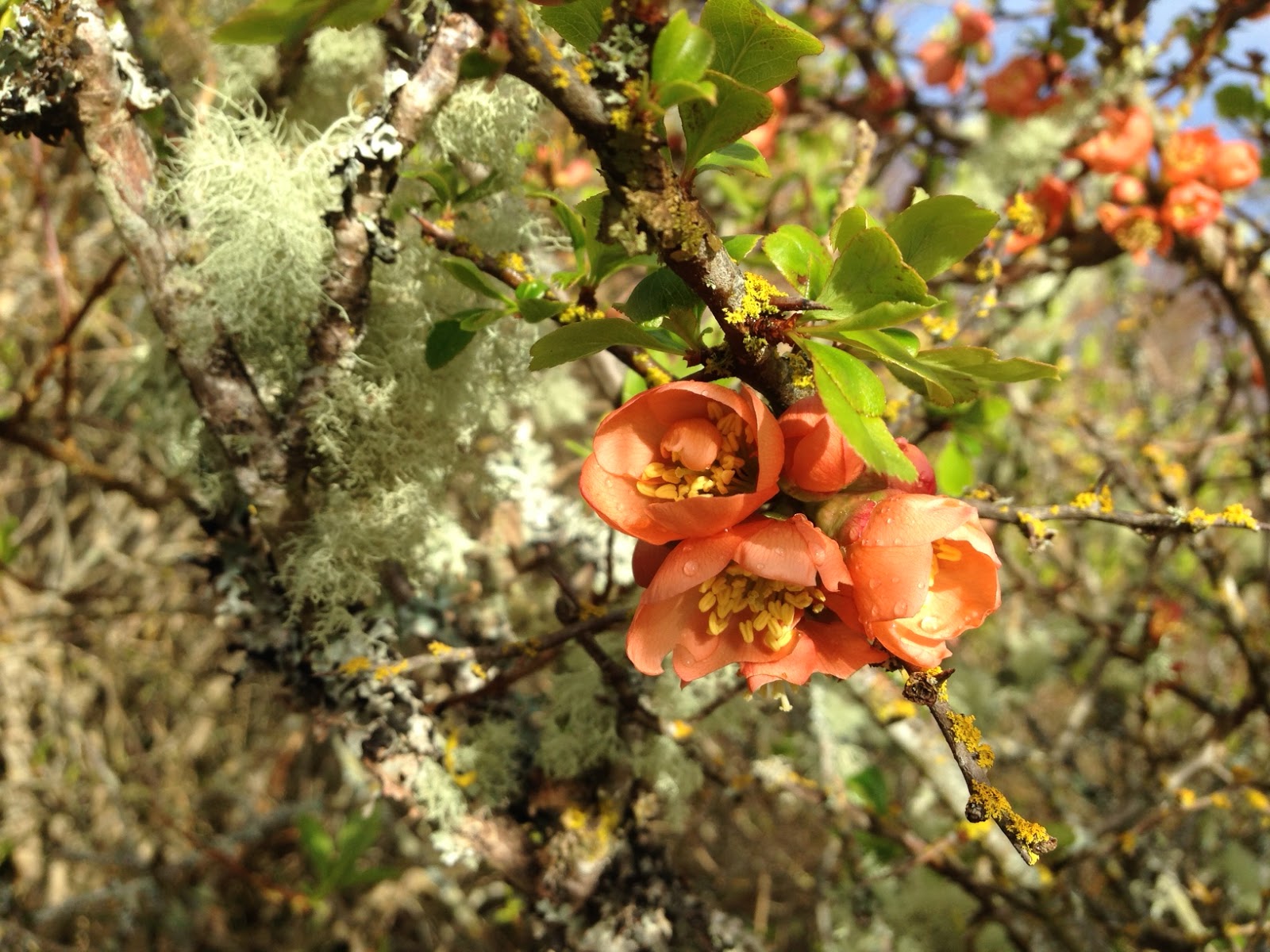
Chaenemeles species, or quince flowers! These ones are quite orange; others are more deep pink in colour. 
Research data management plans (RDMPs) are supposed to help with those questions, and, as I learned, a whole lot more. Our two wonderful presenters delivered a phenomenal talk on Research Data Management plans were Daniel Brendle-Moczuk, the subject librarian for the School of Environmental Studies (and other departments), from the Library References Services, and Kathleen Matthews, from Library Collections Management. Daniel delivered the presentation with input from Kathleen, and both answered questions at the end of the presentation. The presentation covered the what, why, why now, research data life cycle, and components of a data management plan, and I'll cover a brief overview of the presentation here. (In case I don't make sufficiently clear in the post, all of the material I share is from the presentation).

As Brendle-Moczuk and Matthews characterized, Canada is quite behind on its thinking about and thinking through RDMPs. This became quite apparent throughout the presentation, as Daniel's referred and source documents were all either America or out of the UK. For example, "Data Management for Researchers" is written by Krisin Briney, a US-based data management specialist, as are Mark Allen and Dalton Cervo, authors of the text "Mulit-Doman Master Data Management" and "Data Protection and the Cloud: Are the Risks too Great?"by UK author Paul Ticher.  Brendle-Moczuk also frequently cited documents and resources from the UK Data Service and DataONE, or Data Observation Network for Earth (US based).

Backyard Camellia flowers that have fallen. They're beautiful splashes of colour, but they don't last long!

All of this is to say that RDMPs are coming to Canada, and they're overdue. Research data management plans make you think through all aspects of your data: how to gather them, what kinds you want to gather (photos, audio, surveys, questionnaires, interviews, numerical data, geo-spatial data?), how you are going to name your files and organize them (a filename of "Sam's data" is probably only useful to Sam... unless detailed metadata^^^ exist to tell us how to use and interact with the data in the file), what the best formats for them are (remember floppy disks? Or will [proprietary software of your choice] be available in 10 years?), how you are going to treat confidential data and transport them, and how you are going to store and share them. Other questions are also important to consider, such as who has access to my data? And how is it protected if it needs to be?*** What is the researcher's responsibility when it comes to the lifetime of the data, and what are the ethics and legal considerations to take when working with data. The RDMPs make you think about all of these things, and it's very likely that your RDMP is going to need to accompany your grant applications in the future.

***Some of these questions you need to think about when you (if you) complete a Research Ethics Application, which I will cover in an upcoming post.

^^^metadata are the notes and data that tell you about a different set of data. For example, my thesis project is a qualitative research project that collected interviews as the primary data. I also had academic and grey literature that informed my research. The metadata would be a set of notes that are key to explaining my data: where the interviews are kept, how they are kept, which files they are located in, what different acronyms are, where my literature is kept, how that's organized, which program was used to analyze my data, etc. The metadata would be necessary for someone else to understand my data, and how it all fits for my project. Are there organizational responsibilities when it comes to metadata? You bet! Be neat. Be organized. And be consistent with your file names and organizing. And if you ever have the thought "I'll remember this later..." WRITE IT DOWN! I guarantee you, you won't remember.

A bouquet of neighbourhood daffodils I picked for my landlady Kathryn, before her trip!
Currently, there are strong indications that RDMPs are going to become required for researchers in Canada in the future. The Tri-Council of Canada issued a draft statement of principles on digital data management in July of last year, that outlined researchers' responsibilities when it comes to data management. These responsibilities include the collection, formatting, preservation, and sharing of their data through out the lifetime of a project and beyond. There's no telling when that statement will no longer be a draft but become a requirement for researchers, but it applies to the hard sciences and social sciences a lot, so I think it's wise to begin thinking through research data management now.

For a very cute video that added some humour to the presentation, check out "Data Sharing and Management Snafu in 3 Short Acts" (I'm so glad that Daniel found this!).

Gorgeous Lower Thetis Lake reflection. Where does the water start and stop?
A quick and flashy reminder: always make backups of your data. Always. Follow the 3-2-1 Rule:
3 copies, in 2 different media, with 1 backup located offsite.

And one last note: a practice becoming more frequent is for researchers or organizations being asked to prove their research impact, which Brendle-Mozcuk and Matthews recommended as being most easily done with a DOI, or a digital object identifier. It is a persistent link that follows the data, and that can be used when citing data that's used. In Canada, the National Science Library provides a service through DataCite Canada that is: "A data registration service that provides Canadian data centres and libraries with a mechanism for registering research data and assigning digital object identifiers (DOIs) to them. These identifiers allow research data to be findable, citable and accessible for replication and further use." So make sure to check this out if this may be applicable to you. 

Good luck, fellow jedi researchers! I'm sure that you will plan and manage your data well after this post, or at least avoid making some very painful errors with your data. Hugs! 

Wednesday, 16 March 2016

Post 77: Dealing with Impostor Syndrome, Again

It's always the small things that set of my insecurities.

I've known since the beginning of the semester that this week would be my week to present something in my weekly lab meeting about my work, and I find that since last week I've been worrying, and stewing, and brainstorming. Here's kind of the muddled craziness that I am able to upt together:

What can I present? What do I have that's good enough to present? Am I good enough to present and take up peoples' time? What do I have I can present about? I'm don't want to over-burden my already busy colleagues with extra work, so I can't be sending them things to read ahead of time... If I'd wanted to send them something, I should have done that last week. (I thus, have not sent them anything to read.) Well, if I'm not going to send them anything to read from my current chapter, then how can I adequately present about the writing for a chapter? Do I think that I can?

How does one put together a presentation? I don't know how to put together a presentation, or at least, I am concerned that I've forgotten how to. How did I do it before? Well, if I don't have anything from my current chapter, then how can I put a presentation together? For a presentation, you need to have good content. Right. That's where you start. So what do I have I can present about?

Thanks Becky Barnicoat at BuzzFeed for capturing this so well! 
Haha! So that's some of the worry whirly-gig going on in my brain for the last few days. It's gotten a bit more wild the closer I've gotten to my presentation tomorrow morning. Watching myself go through this silly bit of brain work is a little bit funny, once I start to see what I'm doing, and have an awareness about it, instead of simply being in it. (Writing this post is helping me to laugh at myself, and deal with it, once again.) (I've written previously about the Impostor Syndrome, here.)

It's called the impostor syndrome. And it shows up in all kinds of wacky ways. A colleague of mine shared a post this morning from the blog of Hope Jahren, who thinks she's cured herself of it with the simple solution of getting tenure (which is, admittedly, a big deal in academia). Good for her! At the same time, I hope it doesn't turn out to be a merely temporary solution for her. I'm more inclined to think, Once a worrier, always a worrier (and yes, I realize that worrying and the impostor syndrome done have a perfect overlap in the world of Venn Diagrams, but I think they're pretty close). Also, I am nowhere near getting tenure, and am undecided about whether to pursue that route at this point. I'm just trying to finish my master's thesis, which seems gargantuan enough a task at this point! :)

More beautiful spring flowers to brighten up my room! Much needed to combat the grey!
Ms. Jahren's post is quite funny, and I will be going back to read more of her blog. I've signed up as a follower. :) Finding other women in academia, writing about being in academia is definitely an interest of mine.

So. I have this presentation tomorrow morning, and I think that alongside preparing a slide or two about my current chapter, providing a (short) overview of the Monograph style thesis that I'm using, and explaining what that  means for my current chapter, I also want to take about 15 minutes (half of my time) talking about process. And this is definitely part of it. Struggling with this. And not giving up, even though I can go through intense periods of time feeling like I still don't belong here, still don't know what I'm doing, and still struggle to get words on the page and share them with my supervisor. At the same time, I am still at it! The outline of my final chapter was approved after its fourth draft, so full steam ahead to finish this up, and then revise, revise, revise, which is an ongoing process anyways.

So for today, beating the impostor syndrome is about admitting that I am good enough. I am good enough to take half an hour of my colleague's time tomorrow, to let them know where I'm at, and to have them give some input on how they deal with things. I don't really need inquiries about how my thesis work is going; I need invites to work and writing sessions, at this point. Easter Long Weekend, anybody?

I can definitely put together a summary and overview of the assertions and arguments I'm trying to make in my last chapter. It's my final chapter. I'm almost there. And I'd love my colleagues to share in my excitement about this. It's been a long journey to get here.

Afternoon sun at UVic. Lovely, lovely day!
One sentence at a time. One. Word. At. A. Time. This thesis will get finished. I can do this. And so can you, if you're a grad student reading this, going through your own whirly-gig of worry. You've got this. Worry or no worry. We've got this.

***

I am aware that I promised a post on Research Data Management Plans, and I have another in the queue about research ethics, both based on extra workshops organized by Dr. Natalie Ban in the department, and those are coming next. I needed to deal with myself and this lab presentation first. :) Thanks for your patience.

Monday, 7 March 2016

Post 76: Sometimes it's okay to take a sick day (or two, or three)!

As the title undoubtedly suggests, I've been ill (again)!! First it was strep throat for 2 weeks in January, where I really was under the weather, and took almost a week off of work, and it's been a solid cold for a good week that really ended this weekend. When you're sick for an extended while, it's just not fun to keep going and to try to be productive, and I found myself in this negative cycle expecting that I would get more done, getting frustrated when I couldn't, and then trying to do more, and get more done, and then not, and so on. One of those things is a blog post on research data management plans, which is coming up next!

Home art project! Cards for loved ones. 
Towards the end of this past week I was exhausted, tired of feeling unwell, and I was feeling quite negative about the fact that I was drafting yet another version of an outline for my last chapter. I couldn't quite get to feeling good about the work that I was producing, because I was drippy and had that head-stuck-in-a-pillowcase feeling and was tired and not. Doing. Well. I met with my supervisor twice this week, and meant to have a third version of the outline done on Thursday, but went home early hoping I would feel better in the evening (which I did not), and then Friday was not substantially better either.

So I took Friday off, and helped my landlady trim the heads off the hydrangeas that line the front walk, and generally enjoyed getting a bit of sunshine and doing something tactile. I got into the spirit of doing easy-going tactile work and for the first time in a long while undertook an arts and crafts project where I made a few home-made cards. SO MUCH FUN! Picture above. (Mum -- I hope you don't see this post before Dad checks the mail! You should be getting your card today!)

Look at that colour! So lovely!
Yesterday (Saturday) I also took a day off to spend time with my partner and with friends, and I walked in the sunshine along the inner harbour, took in the tulips (below), and loved the feeling of my black pants getting very warm from the direct sunshine. And, for the first time this year, I worried about getting a sunburn, and not having packed sunscreen. This is a wonderful thing.

Today I spent the morning at work with my friend Karen, and in 2.5 hours I rewrote entirely and sent off what I think is a decent interim draft of my chapter that my supervisor and I can discuss in a meeting this week. I felt positive about my work, I was focused, and engaged. And I felt very good for the rest of the day.

So here's to taking a day (or two) off when you need it. There is no sense in pushing yourself when you're already running on fumes. A solid break to get well is a great idea.

Stay healthy!!

Also, here, some complimentary white and lovely cherry blossoms from my View Royal neighbourhood. :)
This tree was buzzing busy with honey bees and other pollinators!